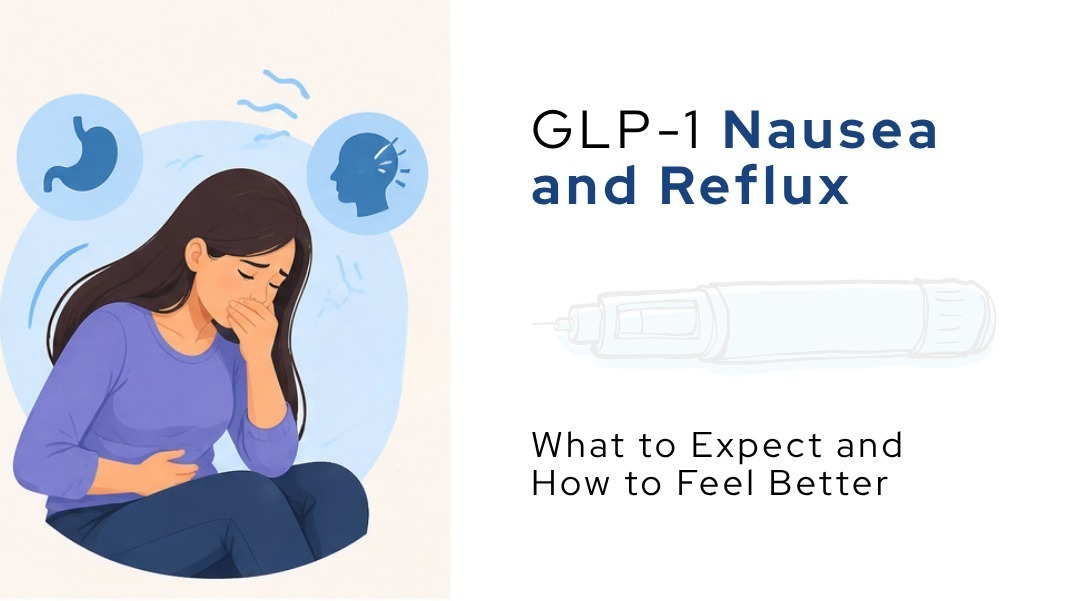
Starting a GLP-1 medication? Here’s what you need to know.
One of the most common questions people ask after starting a GLP-1 medication such as Ozempic, Wegovy or Mounjaro is: “Is this nausea normal?”
Nausea is a commonly reported side effect of GLP-1–based medications, particularly when starting treatment or after a dose increase. For many people it is mild, manageable and improves as the body adjusts.
Reflux, heartburn, bloating and early fullness can also occur. GLP-1–based medications influence appetite and fullness signals and can also slow gastric emptying, particularly during treatment initiation and dose escalation. These effects can contribute to digestive symptoms in some people.
The good news is that mild symptoms can often be managed with adjustments to meal size, food choices and treatment progression.
Why do GLP-1 medications cause nausea and reflux?
GLP-1–based medications reduce appetite and can slow gastric emptying — the rate at which food leaves the stomach. As a result, you may notice:
- Nausea, particularly when starting treatment or after a dose increase
- Feeling full sooner than usual
- Bloating or indigestion
- Heartburn or reflux
- Mild abdominal discomfortThese symptoms are often temporary and may improve as your body becomes accustomed
to the medication.
What can you do to feel better?
Eat smaller meals
Large meals may be harder to tolerate when gastric emptying is slower. Try smaller portions, eat slowly, and stop when comfortably satisfied rather than overly full.
Choose foods that are easier to tolerate
When nausea is troublesome, smaller portions and simple, lower-fat foods may be better tolerated. If you can, continue to prioritise protein with options such as yoghurt, eggs or small portions of lean protein. Bland carbohydrate foods such as toast, crackers or rice may occasionally be useful when nausea is more pronounced.
Many people find that fried, greasy, rich or spicy foods make symptoms worse.
Use structured eating rather than continuous grazing
Aim for structured meals or planned small eating opportunities rather than continuous grazing throughout the day. This can help you maintain nutrition while avoiding repeated eating when you are already feeling full.
Separate food and fluids if this feels more comfortable
Drinking large amounts with meals can increase fullness or reflux for some people. Sipping fluids between meals may be more comfortable, while still making sure you drink enough across the day.
Tips for managing reflux and heartburn
If reflux is becoming troublesome, these measures may help:
- Avoid eating within two to three hours of bedtime
- Stay upright after meals
- Elevate the head of your bed if symptoms occur at night
- Identify personal trigger foods such as caffeine, chocolate, peppermint, spicy foods or
acidic foods - Speak with your GP or specialist if symptoms persist
When should you speak to your doctor?
While mild nausea and occasional reflux can occur, some symptoms should not simply be attributed to the medication. Seek medical advice if you experience:
- Persistent vomiting
- Difficulty keeping fluids down
- Signs of dehydration, such as dizziness or very dark urine
- Severe or worsening abdominal pain
- Severe, persistent upper abdominal pain, particularly if it radiates to the back
- Vomiting blood or passing black stools
- Reflux that is severe, persistent or worsening despite simple measures
These symptoms may require further assessment. Severe symptoms or an inability to maintain hydration may require urgent medical attention.
Should you adjust your GLP-1 dose?
If nausea is affecting your daily life, speak with your prescribing clinician before making any changes.
Your prescribing clinician may recommend staying at the current dose for longer, delaying dose escalation, or in some circumstances returning to a previously tolerated dose. Do not change your dose or dosing schedule without discussing it with your prescriber.
The goal is steady, sustainable progress rather than pushing through significant side effects.
What if you have had bariatric surgery?
GLP-1–based medications may also be used in selected patients after bariatric surgery, including for inadequate weight loss or weight recurrence. In this setting, digestive symptoms and nutritional intake may require closer monitoring.
Reflux can be more common after sleeve gastrectomy and may sometimes worsen during treatment. Persistent or significant symptoms deserve assessment rather than simply being assumed to be a medication side effect. Depending on the circumstances, management may involve dietary changes, medication adjustment or further investigation.
Do you need supplements or meal replacements?
Some people may benefit from nutritional supplements or meal replacements, particularly if reduced appetite makes it difficult to meet protein or other nutritional needs, or if they have previously undergone bariatric surgery.
These should be individualised with your healthcare team or dietitian rather than selfprescribed.
The key message
Nausea, reflux, bloating and early fullness can occur when starting a GLP-1 based medication or increasing the dose. For many people, symptoms improve with time and can be managed with changes to meal size, food choices and treatment progression.
However, significant or persistent symptoms should not simply be endured. Early review allows symptoms, nutrition and medication dosing to be assessed together, helping treatment remain both tolerable and effective.
At Perth Surgical & Bariatrics, medical weight management is approached as ongoing specialist care — not simply a prescription — with attention to nutrition, side effects, body composition and long-term metabolic health.